

Is PEMF Safe? Understanding How Pulsed Electromagnetic Field Technology Is Used
Pulsed Electromagnetic Field (PEMF) technology has been studied and used in various settings for decades. As interest in home-use PEMF devices continues to grow, understanding how PEMF interacts with the body—and what is known about its safety profile—is essential for making informed decisions.
What Is PEMF and Why Safety Matters
PEMF works by generating pulsed magnetic fields that interact with the body’s electrical systems. These fields induce small electrical currents within tissues, influencing cellular activity and signaling processes.
Because PEMF interacts with the body at a foundational level, questions about safety are common and important. Unlike pharmaceuticals or invasive procedures, PEMF does not introduce external substances into the body. Instead, it delivers energy in the form of electromagnetic fields.
Understanding safety involves examining:
- The nature of electromagnetic exposure
- The intensity and frequency of the fields used
- The duration and consistency of use
- Individual variability between users
A Non-Invasive Technology
One of the most important aspects of PEMF is that it is non-invasive.
This means:
- No injections
- No surgical procedures
- No physical penetration of the skin
- No introduction of chemicals or compounds
Energy is delivered externally through magnetic fields, which pass through tissues without requiring direct contact with internal structures.
This distinguishes PEMF from many other interventions that involve higher levels of physical or chemical interaction with the body.
Low-Level Electromagnetic Exposure
PEMF devices typically operate within low-frequency electromagnetic ranges, often referred to as Extremely Low Frequency (ELF).
These ranges are generally far below those used in:
- X-rays
- CT scans
- Radiation-based therapies
Unlike ionizing radiation, PEMF fields are non-ionizing, meaning they do not carry enough energy to remove electrons from atoms or damage DNA directly.
This is a key distinction in discussions of electromagnetic safety.
How PEMF Differs from Other Electromagnetic Sources
People are exposed to electromagnetic fields daily from sources such as:
- Power lines
- Household electronics
- Wireless devices
However, PEMF differs from these sources in several ways:
- Controlled Output
PEMF devices are designed to deliver specific frequencies and pulse patterns.
- Structured Pulsing
Rather than continuous exposure, PEMF uses pulsed signals with defined timing.
- Targeted Application
Devices are typically used intentionally and for defined durations.
This controlled approach is central to how PEMF systems are designed and used.
Regulatory Context and Medical Use
PEMF technology has been studied and used in clinical and research settings for decades.
In some cases, specific PEMF devices have received regulatory clearance in certain countries for defined applications. These clearances are typically based on:
- Controlled studies
- Defined usage parameters
- Specific device configurations
It is important to understand that not all PEMF devices are regulated in the same way, especially in the consumer market. The regulatory status of a device depends on how it is classified and marketed.
General Tolerance and User Experience
Most users describe PEMF as a non-sensory or minimally perceptible experience.
Unlike electrical stimulation, which can create noticeable muscle contractions or tingling, PEMF typically does not produce strong physical sensations.
Common experiences may include:
- Mild warmth (depending on device design)
- Subtle pulsing awareness
- No sensation at all
The absence of strong physical sensation is one reason PEMF is often considered a gentle modality.
Factors That Influence Safety
While PEMF is generally discussed as a low-risk technology, several factors influence how it should be used.
- Intensity (Field Strength)
Higher-intensity devices generate stronger magnetic fields, which may produce greater induced currents.
- Frequency
Different frequencies interact with biological systems in different ways.
- Duration of Use
Longer sessions increase total exposure.
- Device Design
Coil configuration, waveform, and system integration all affect how fields are delivered.
- Individual Sensitivity
Responses to electromagnetic exposure can vary between individuals.
Precautionary Considerations
Although PEMF is widely used, certain individuals are often advised to exercise caution or consult a professional before use.
Commonly Mentioned Considerations:
- Individuals with implanted electronic devices (e.g., pacemakers)
- Pregnancy (precautionary approach)
- Recent surgical procedures
- Certain neurological conditions
These considerations are not unique to PEMF and are common across many forms of electromagnetic and electrical technologies.
Comparison to Electrical Stimulation Devices
PEMF is often compared to technologies such as:
- TENS (Transcutaneous Electrical Nerve Stimulation)
- EMS (Electrical Muscle Stimulation)
The key difference is that:
- TENS/EMS deliver electrical current directly through electrodes
- PEMF induces current indirectly through magnetic fields
Because PEMF does not rely on direct electrical contact, it avoids some of the localized intensity associated with electrode-based systems.
Thermal Effects and Energy Levels
PEMF devices typically do not generate significant heat within tissues.
Unlike high-frequency electromagnetic systems (such as microwave-based technologies), PEMF operates at energy levels that are not associated with thermal buildup.
Any warmth experienced is usually related to:
- Device components
- Surface-level interaction
- Environmental factors
This non-thermal characteristic is another factor often discussed in relation to safety.
Long-Term Use Considerations
PEMF is often used repeatedly over time rather than as a one-time intervention.
Because of this, long-term exposure is an important consideration.
Key points include:
- Consistency of use is common
- Exposure levels remain relatively low compared to many other technologies
- Devices are designed for repeated application
Research into long-term electromagnetic exposure continues to evolve, and PEMF remains an area of ongoing study.
Scientific Research and Ongoing Evaluation
PEMF has been studied across multiple disciplines, including:
- Biophysics
- Cellular biology
- Rehabilitation sciences
- Bioelectromagnetics
While many aspects of PEMF interaction are well understood from a physics standpoint, biological responses are complex and continue to be explored.
Scientific evaluation focuses on:
- Mechanisms of action
- Dose-response relationships
- Interaction with different tissues
- Variability between individuals
Responsible Use Guidelines
For individuals considering PEMF, general responsible-use principles include:
Follow Device Instructions
Use devices according to manufacturer guidelines.
Start Gradually
Begin with lower intensity or shorter sessions when appropriate.
Monitor Personal Response
Pay attention to how the body responds over time.
Avoid Overuse
More exposure does not necessarily mean better outcomes.
The Importance of Device Quality
Not all PEMF devices are created equal.
Differences in quality can include:
- Engineering standards
- Field consistency
- Safety features
- Certification and testing
Higher-quality devices are typically designed with more precise control over frequency, intensity, and pulse patterns.
This consistency is important for both performance and safety.
Misconceptions About PEMF Safety
“All electromagnetic fields are harmful”
Not all electromagnetic fields are the same. PEMF operates within non-ionizing, low-frequency ranges that differ significantly from high-energy radiation.
“Stronger is always better”
Higher intensity does not necessarily equate to better results. Controlled, appropriate levels are key.
“PEMF is the same as electrical stimulation”
PEMF uses magnetic induction, not direct electrical current.
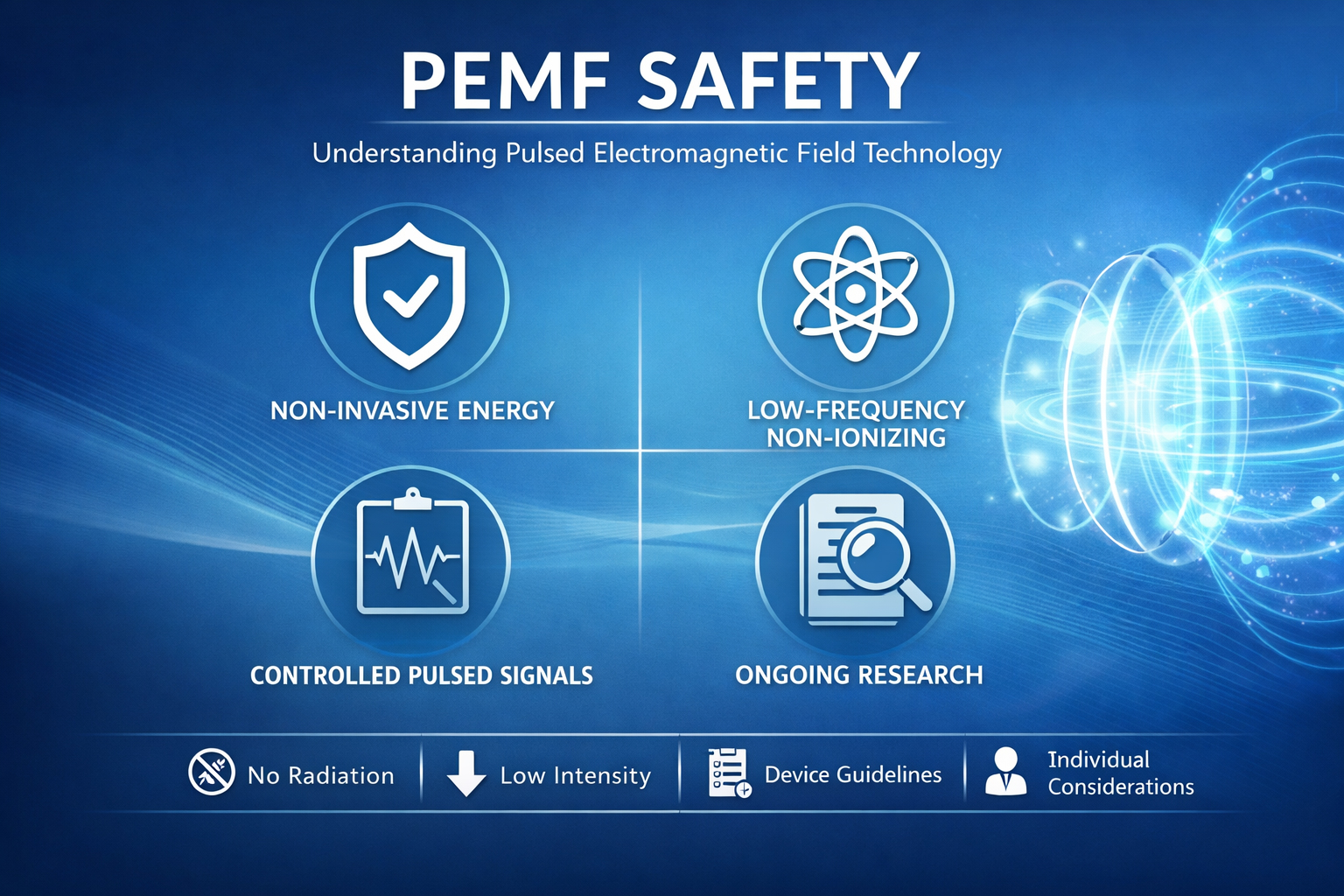
Summary: Understanding PEMF Safety
PEMF technology is characterized by:
- Non-invasive energy delivery
- Low-frequency, non-ionizing electromagnetic fields
- Induced microcurrents within tissues
- Controlled, pulsed exposure
Safety considerations focus on:
- Proper device use
- Individual circumstances
- Awareness of contraindications
- Quality of the device
Final Perspective
PEMF represents a form of energy-based interaction with the body that is fundamentally different from chemical or invasive approaches.
Its safety profile is generally discussed in the context of:
- Low-energy exposure
- Non-ionizing fields
- Controlled application
As with any technology, informed use and understanding of individual factors are essential.